IPL and laser hair removal are often confused — but they are fundamentally different technologies with very different results. Understanding these differences is critical to choosing the safest, most effective treatment for your skin. This guide breaks down everything you need to know so you can make an informed decision.
We Use Medical-Grade Laser — Not IPL. Call for a Free ConsultationThe most important thing to understand is that IPL is not a laser. Despite being marketed alongside laser treatments — and sometimes even called "laser" by salons and medspas — IPL (Intense Pulsed Light) uses a completely different technology than true laser hair removal. This distinction isn't just technical — it directly affects your safety, your results, and the value of your investment.
IPL devices emit broad-spectrum light — essentially a flash of white light that contains multiple wavelengths across the visible spectrum (typically 500-1200 nanometers). This scattered light energy is absorbed by melanin (pigment) in the hair, generating heat that damages the follicle. However, because the light is spread across many wavelengths, the energy delivery is less focused and less efficient. Think of IPL as a floodlight — it illuminates a wide area, but the intensity at any single point is lower.
Because IPL's broad-spectrum light can be absorbed by melanin in both the hair and the surrounding skin, it carries a higher risk of complications for patients with darker skin tones or tanned skin. The device cannot distinguish between melanin in the hair follicle and melanin in the epidermis, which can lead to burns, blistering, and hyperpigmentation.
A true laser (Light Amplification by Stimulated Emission of Radiation) emits a single, highly concentrated wavelength of light. This precision allows the laser beam to penetrate to a specific depth and target the hair follicle with maximum energy while minimizing absorption by surrounding skin tissue. Think of a laser as a precision spotlight — all its energy is concentrated on a single target.
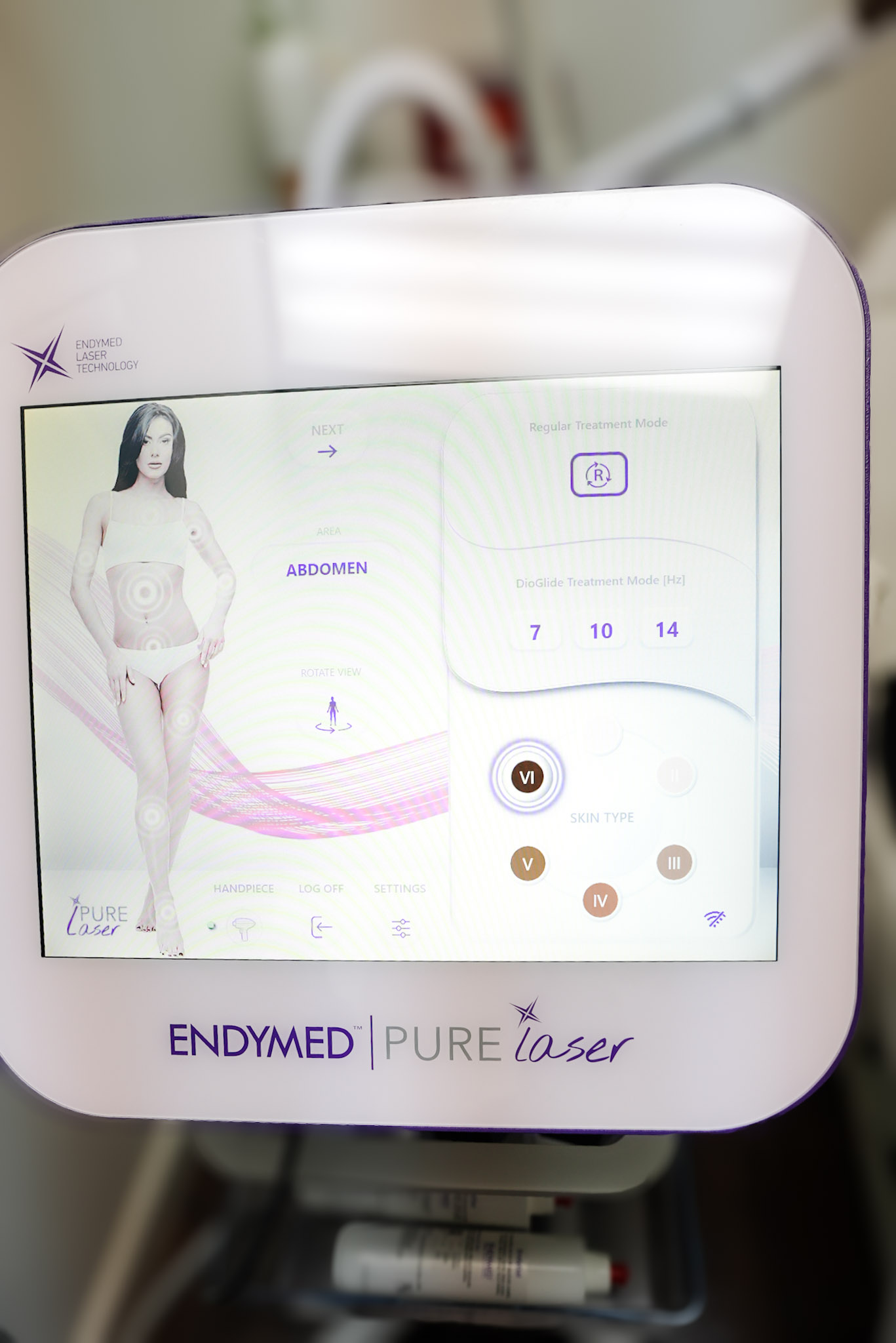
Different laser wavelengths serve different purposes. The Alexandrite laser (755nm) is excellent for lighter skin types with dark hair. The Diode laser (800-810nm) works across a broader range of skin types. The Nd:YAG laser (1064nm) uses the longest wavelength, bypassing melanin in the skin entirely, making it the safest option for darker skin tones — including Fitzpatrick skin types IV, V, and VI.
At Paradise Medical Center Dermatology Clinic, we exclusively use FDA-approved, medical-grade laser systems — never IPL. Our technology portfolio includes Nd:YAG and diode platforms that safely treat all skin types with precision and effectiveness. Call (786) 738-9515 for a free consultation.
To make an informed decision, you need to understand how these two technologies compare across every factor that matters — from effectiveness to safety to long-term cost.
This is the most important comparison, and laser wins decisively. Clinical studies consistently demonstrate that true laser hair removal achieves significantly higher rates of permanent hair reduction compared to IPL. The reason is straightforward: laser's concentrated, single-wavelength energy penetrates deeper into the follicle and delivers more consistent thermal damage to the hair root. IPL's scattered energy means each pulse delivers less effective energy to any individual follicle, resulting in less complete follicular destruction.
In practical terms, most patients achieve 80-90% permanent hair reduction with 6-8 laser sessions. IPL patients often require 8-12 or more sessions for comparable (though typically less complete) reduction, with a higher likelihood of regrowth over time.
Because laser is more efficient at destroying hair follicles per session, most patients need fewer laser sessions (typically 6-8) compared to IPL (often 8-12+). Fewer sessions mean fewer clinic visits, less time spent in treatment, and — when you factor in the total cost of additional sessions — often a lower total investment despite laser's higher per-session price.
This is where the difference becomes critical, especially in Miami's diverse community. IPL's broad-spectrum light poses significant risks for patients with medium to dark skin tones (Fitzpatrick types IV-VI). Because IPL cannot selectively bypass melanin in the skin, patients with more pigment face higher risks of burns, blistering, hyperpigmentation (dark spots), and hypopigmentation (light spots).
Medical-grade lasers — particularly the Nd:YAG at 1064nm — are specifically engineered for safe use on darker skin. The longer wavelength bypasses epidermal melanin and targets only the hair follicle. This makes Nd:YAG the gold standard for hair removal on all skin tones, including the darkest complexions. At Paradise Medical Center, Dr. Teresa Moreno, DNP, personally selects the optimal laser platform for each patient's skin type and hair characteristics. This individualized approach is why our clinic safely and effectively serves Miami's beautifully diverse community.
Both IPL and laser produce some level of discomfort — often described as a rubber band snapping against the skin. However, modern medical-grade lasers include integrated cooling systems (contact cooling, cryogen spray, or cold air) that significantly reduce discomfort during treatment. Most laser patients describe the experience as mild and tolerable. IPL devices may or may not include comparable cooling technology, depending on the device quality. Consumer-grade and salon-grade IPL devices often lack the sophisticated cooling systems found in medical-grade laser platforms, resulting in a less comfortable experience.
Modern laser systems with large spot sizes can treat areas quickly — a full back in 20-30 minutes, underarms in under 10 minutes. IPL treatment times are comparable for some devices but can be slower for others, particularly smaller consumer-grade units. The practical difference in session duration is usually minimal for clinical-grade equipment.
IPL is almost always cheaper per session than laser — often significantly so. This is the primary appeal of IPL for many consumers. However, the per-session cost comparison is misleading if you don't consider the total investment. Because IPL requires more sessions for comparable results, produces less permanent reduction, often requires ongoing maintenance sessions, and may need supplemental laser treatment to achieve the results IPL couldn't deliver, the total lifetime cost of IPL hair removal can equal or exceed that of laser — while delivering inferior results. The smarter comparison is total cost for permanent results, not cost per individual session.
IPL devices are less expensive to purchase and require less training to operate, which is why they're found in beauty salons, nail spas, retail chains, and even sold as at-home consumer devices. This accessibility is both IPL's advantage and its biggest risk — the barrier to entry is low, meaning treatments may be performed by minimally trained operators without medical supervision.
Medical-grade laser systems are substantially more expensive, require specialized training, and should only be operated under the supervision of a licensed medical professional. This higher barrier ensures that laser treatments are performed in controlled clinical settings by qualified providers who can safely assess your skin, select the right technology, and respond appropriately if complications arise.
Don't settle for IPL when you can have true laser hair removal under expert medical supervision. Call Paradise Medical Center Dermatology Clinic for a free consultation with Dr. Teresa Moreno, DNP.
Call (786) 738-9515 — Free ConsultationIPL is often marketed as a safe, gentle alternative to laser. While IPL can be effective for certain patients under certain conditions, there are real risks that consumers should understand before choosing IPL — especially in a market where IPL is frequently performed by non-medical operators.
Because IPL emits energy across a broad spectrum, there's a greater chance of energy being absorbed by unintended targets — particularly melanin in the skin rather than just the hair follicle. This can result in superficial burns, blistering, post-inflammatory hyperpigmentation (dark patches that can persist for months), and in rare cases, scarring. These risks are amplified when IPL is performed by untrained operators who may not properly assess skin type, use appropriate energy settings, or recognize early signs of adverse reactions.
IPL struggles with several common hair/skin combinations. Fine or light-colored hair contains less melanin, giving IPL's already scattered energy even less to target. Very dark skin absorbs too much of IPL's broad-spectrum light, creating a high risk of burns. Tanned or sun-exposed skin shifts the melanin balance, increasing the risk of complications. Red, gray, and blonde hair are essentially untreatable with IPL. While laser also has limitations with very light hair, medical-grade laser platforms — particularly those with adjustable wavelengths and precise energy delivery — can safely and effectively treat a much broader range of skin and hair types than IPL.
The consumer market is flooded with at-home IPL devices marketed as convenient, affordable alternatives to professional treatment. While these devices can produce some temporary hair reduction, they operate at a fraction of the energy levels used in clinical settings — making them significantly less effective. At-home devices also lack the safety features, cooling systems, and professional calibration that clinical devices provide. They cannot be customized for your specific skin and hair type. And they carry real risks of burns and skin damage when used incorrectly — particularly on darker skin tones or sensitive areas.
At-home IPL can work for temporary hair management in suitable candidates (light skin, dark hair), but it should not be confused with the permanent hair reduction achieved by professional laser treatment.
Perhaps the most significant risk factor with IPL isn't the technology itself — it's who's operating it. Because IPL devices are less regulated and cheaper than medical-grade lasers, they're frequently used in settings without medical supervision — beauty salons, nail studios, retail chains, and homes. This means there may be no qualified professional assessing your skin type and contraindications, no medical oversight to adjust settings based on your reaction, no trained response if a complication occurs, and no accountability if something goes wrong.
At Paradise Medical Center Dermatology Clinic, every treatment is performed under the direct supervision of Dr. Teresa Moreno, DNP — a medical professional with over 20 years of experience. This level of medical oversight ensures your safety is never compromised. Call (786) 738-9515 to learn more.
The right choice depends on your specific skin type, hair characteristics, goals, and budget. Here's a practical guide to help you decide.
However, if you're in Miami — or anywhere with access to a qualified laser clinic — we strongly recommend choosing medical-grade laser for superior safety and results.
Neither technology is effective on white, gray, or very light blonde hair (both require melanin to target). If your hair falls into these categories, alternative methods like electrolysis may be more appropriate. During your consultation at Paradise Medical Center, Dr. Moreno will honestly assess whether laser is the right treatment for your specific case — and recommend alternatives if it isn't. We'd rather give you honest advice than sell you a treatment that won't deliver results.
We are sometimes asked why we don't offer IPL alongside our laser services. The answer is simple: we believe in offering only the most effective, safest treatments available — and IPL doesn't meet that standard.
Every laser system at Paradise Medical Center is FDA-approved for permanent hair reduction. FDA approval requires rigorous clinical testing demonstrating both safety and efficacy. Our laser platforms have passed these tests — and they deliver proven results for patients of all skin types.
Miami is one of the most diverse cities in the world, and our patient base reflects that beautiful diversity. Our Nd:YAG and diode laser platforms safely and effectively treat Fitzpatrick skin types I through VI — from the fairest to the darkest skin tones. We would not be able to serve our community safely with IPL technology.
Every treatment plan is designed and supervised by Dr. Teresa Moreno, DNP, with over 20 years of clinical experience. This isn't a corporate policy line — it's how we actually operate. Dr. Moreno personally assesses every patient, selects the optimal laser and settings, and oversees the treatment process to ensure safety and effectiveness.
Our medical-grade laser platforms include advanced cooling systems that protect the skin's surface while the laser energy targets the follicle beneath. This cooling technology makes treatments more comfortable and significantly reduces the risk of surface-level side effects like redness and swelling.
We don't use one-size-fits-all settings. Every treatment is calibrated to your specific skin type, hair color, hair thickness, and the sensitivity of the treatment area. This personalized approach is only possible with medical-grade equipment operated by an experienced medical provider — and it's what separates professional laser treatment from generic IPL sessions.
Experience the difference that medical-grade laser makes. Call (786) 738-9515 for a free, no-obligation consultation.
Misinformation about IPL and laser abounds — much of it spread by marketing for at-home devices and non-medical providers. Let's separate fact from fiction.
Fact: Clinical evidence consistently shows that true laser hair removal achieves higher rates of permanent hair reduction in fewer sessions than IPL. The technologies are not equivalent — laser's single-wavelength precision delivers more effective energy to the follicle than IPL's scattered broad-spectrum light.
Fact: Lower intensity doesn't equal safer. IPL's broad-spectrum light actually poses more risk to darker skin types because it can't selectively bypass melanin in the skin the way Nd:YAG laser can. Safety comes from precision and proper medical oversight — not from lower energy levels.
Fact: At-home devices operate at a fraction of professional energy levels. They can provide temporary hair reduction for suitable candidates (light skin, dark hair), but they cannot match the permanent results of professional laser treatment. The FDA classifies at-home devices for "hair reduction" — not "permanent hair removal."
Fact: This is a marketing misconception. IPL is not a laser — it's a broad-spectrum light device. True laser uses a single, concentrated wavelength. The technologies work differently, perform differently, and carry different risk profiles. When a salon advertises "laser hair removal" but uses IPL equipment, they're misrepresenting the technology.
Fact: IPL costs less per session, but when you factor in the additional sessions needed, the less permanent results, the potential need for maintenance or supplemental laser treatment, and the risk of complications that may require medical attention, the total cost of IPL can equal or exceed laser — with inferior outcomes.
Fact: There's enormous variation in laser equipment quality. Low-end laser devices may perform only marginally better than IPL, while premium, FDA-approved platforms like those at Paradise Medical Center deliver dramatically superior results. The equipment matters — and so does the expertise of the provider operating it.
🎬 Video: IPL vs Medical-Grade Laser Hair Removal — Understanding the Difference
YouTube video will be embedded here
No. IPL (Intense Pulsed Light) uses broad-spectrum light across multiple wavelengths, while true laser uses a single, concentrated wavelength. Laser is more precise, penetrates deeper into the follicle, and delivers superior long-term results — especially for diverse skin types.
True laser hair removal is more effective. Laser's single-wavelength precision targets hair follicles more accurately and delivers energy more efficiently. Clinical studies consistently show laser achieves higher rates of permanent hair reduction in fewer sessions compared to IPL.
IPL carries a higher risk for darker skin tones because its broad-spectrum light can be absorbed by melanin in the skin, potentially causing burns or hyperpigmentation. Medical-grade lasers like Nd:YAG are specifically designed to safely treat dark skin by using longer wavelengths that bypass skin melanin.
IPL devices are less expensive to purchase and maintain. However, IPL requires more sessions and produces less permanent results — meaning the total long-term cost can actually exceed laser treatment while delivering inferior outcomes.
At-home IPL devices operate at much lower energy levels than clinical devices, making them significantly less effective. They can provide temporary reduction for light-skinned, dark-haired candidates, but cannot match professional laser results. They also carry risks of burns if used incorrectly.
We exclusively use FDA-approved, medical-grade laser systems — never IPL. Our platforms include Nd:YAG and diode technologies that safely and effectively treat all skin types. Call (786) 738-9515 for a free consultation with Dr. Teresa Moreno, DNP.
Don't settle for IPL when you can have FDA-approved, medical-grade laser treatment under expert supervision. Call Paradise Medical Center Dermatology Clinic today for your free consultation.
Call (786) 738-9515 Now