Early detection saves lives. Our board-certified dermatologists provide thorough skin cancer screenings using advanced dermoscopy technology. Protect yourself and your loved ones with regular skin examinations.
Schedule Your Screening Today🎬 Video: What to Expect During Your Skin Cancer Screening
YouTube video will be embedded here
Living in sunny Miami means year-round exposure to ultraviolet (UV) radiation, the primary cause of skin cancer. With more than 5 million cases of skin cancer diagnosed annually in the United States, it's the most common form of cancer—but also one of the most preventable and treatable when caught early. At Paradise Medical Center, our board-certified dermatologists are dedicated to protecting Miami residents through comprehensive skin cancer screening and education.
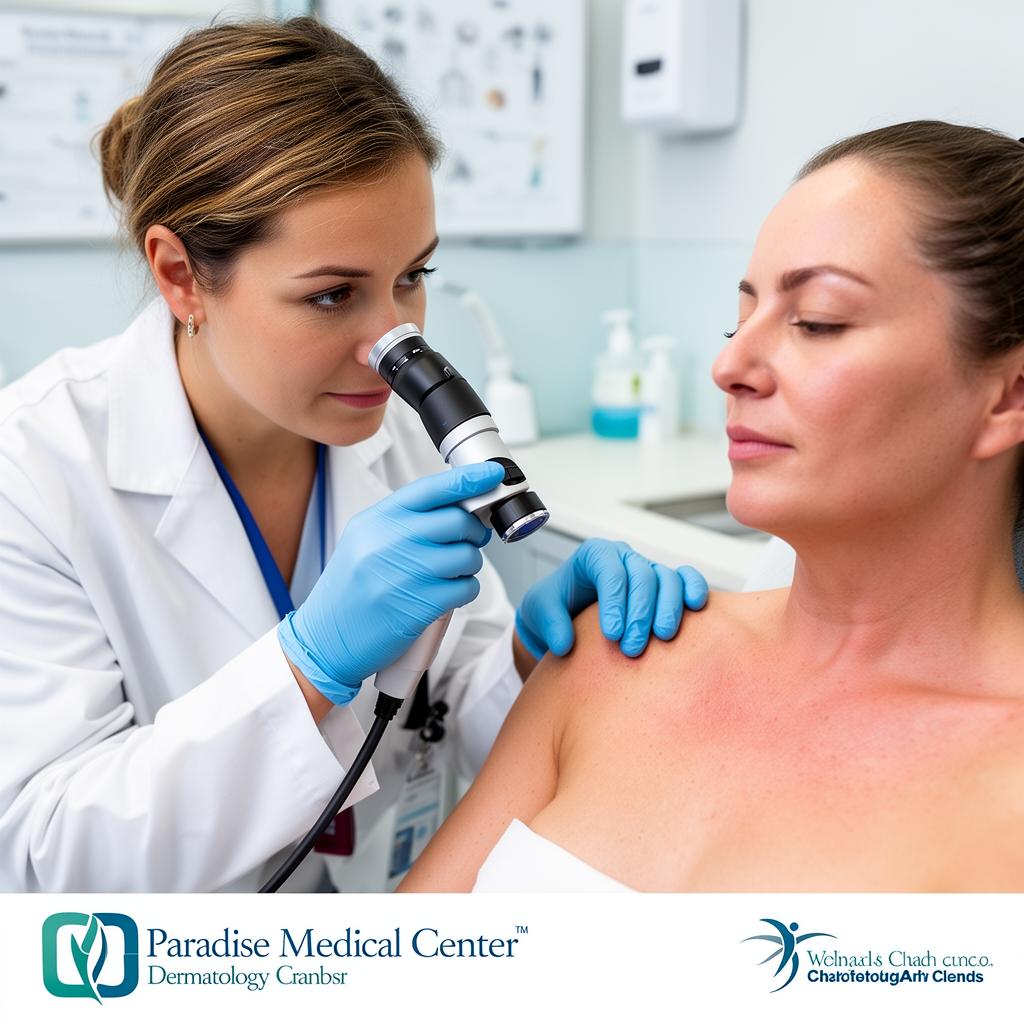
Skin cancer screening is a simple, painless examination that can literally save your life. During a screening, our dermatologists systematically examine every inch of your skin, looking for suspicious moles, lesions, or growths that may indicate skin cancer. We use advanced dermoscopy technology—specialized magnifying devices with polarized light—to examine skin lesions in detail that's impossible to see with the naked eye.
Early detection is crucial because when skin cancer is found early, before it has a chance to spread, the five-year survival rate exceeds 99%. However, if melanoma—the deadliest form of skin cancer—spreads to distant organs, the survival rate drops dramatically. This is why we emphasize the importance of annual skin cancer screenings for all adults, regardless of skin type or sun exposure history.
Miami's unique combination of intense sun, outdoor lifestyle, and diverse population makes skin cancer awareness especially important in our community. Whether you have fair skin that burns easily or darker skin that rarely burns, you are at risk for skin cancer and should receive regular screenings from a qualified dermatologist.
Understanding the warning signs of melanoma can help you identify suspicious moles between dermatology appointments. The ABCDE rule provides an easy-to-remember guide for evaluating moles and determining when to seek professional evaluation.
One half doesn't match the other half
Edges are irregular, ragged, or blurred
Color is uneven with shades of brown, black, tan, red, white, or blue
Larger than 6mm (size of a pencil eraser)
Size, shape, or color is changing over time
If we identify a suspicious mole or lesion during your screening, we may recommend a skin biopsy to determine whether it is cancerous. A biopsy is a simple procedure performed in our office under local anesthesia. We remove a small sample of tissue and send it to a pathology laboratory for microscopic examination.
There are several types of skin biopsies, and we'll select the most appropriate method based on the size, location, and characteristics of the lesion. Our dermatologists are highly skilled in performing biopsies with minimal scarring, and we'll explain the procedure thoroughly before proceeding.
Not every skin abnormality is cancer. Our dermatologists are experts in distinguishing between benign conditions—such as seborrheic keratoses, cherry angiomas, or inflamed acne—and potentially concerning lesions. During your screening, we'll evaluate all your skin concerns and provide appropriate treatment recommendations for any conditions we identify.
Understanding the different types of skin cancer helps you appreciate why regular screenings are so important. Our dermatologists are trained to identify all forms of skin cancer, from the most common to the most aggressive.
The most common type of skin cancer, BCC rarely spreads but can cause significant local damage if untreated.
The second most common skin cancer, SCC can spread if left untreated, especially in immunocompromised patients.
The most dangerous form of skin cancer, melanoma can spread rapidly to other organs if not caught early.
At Paradise Medical Center, we provide comprehensive dermatological services beyond skin cancer screening. Whether you're concerned about hair loss, aging skin, or chronic skin conditions, our dermatologists can help. We believe in treating the whole patient, addressing both medical and aesthetic concerns to help you look and feel your best.
Many patients who visit us for cosmetic concerns like PRP hair restoration or Botox are surprised to learn about skin health issues during their appointments. This is one of the benefits of receiving care from board-certified dermatologists who can identify potential problems you might not have noticed yourself.
Beyond screening for cancer, maintaining overall skin health is important for both your appearance and your protection against disease. Treatments like microneedling can help repair sun damage, improve skin texture, and stimulate the production of healthy new skin cells. Combined with proper sun protection, these treatments help keep your skin healthy and resilient.
Many patients feel anxious about their first skin cancer screening, often because they don't know what to expect. Here's a detailed look at our screening process to help you feel prepared and comfortable.
Before Your Appointment: We recommend removing nail polish from your fingers and toes, as melanoma can occur under the nails. Wear minimal makeup so we can examine your facial skin thoroughly. Note any moles or spots you're concerned about so you can point them out during your exam.
During the Examination: You'll change into a gown, and our dermatologist will systematically examine your entire body, including your scalp, between your fingers and toes, and other areas often overlooked. We use dermoscopy—a special magnifying device with polarized light—to closely examine any suspicious spots. The exam typically takes 15-20 minutes.
Discussion of Findings: After the examination, your dermatologist will discuss any findings with you. If we identify suspicious lesions, we'll explain our concerns and recommend next steps, which may include monitoring, biopsy, or treatment. We'll answer all your questions and ensure you understand our recommendations.
Follow-Up Care: Based on your risk factors and findings, we'll recommend an appropriate screening schedule. Most patients should have annual screenings, but those with higher risk may need more frequent examinations. We may also recommend mole mapping—photographing your moles to track changes over time.
While you're visiting our clinic for your skin cancer screening, it's an excellent opportunity to discuss any cosmetic concerns with our dermatologists. Many of our patients combine their medical dermatology appointments with cosmetic consultations, asking about treatments like Botox, fillers, or laser treatments. Our comprehensive approach means you can address all your skin concerns in one visit.
Paradise Medical Center offers a full range of dermatological treatments, from medical to cosmetic. After your skin cancer screening, ask about our laser treatments, which can address sun damage, unwanted hair, and other skin concerns. We'll create a personalized treatment plan that addresses your unique needs and goals.
Understanding your risk factors helps you make informed decisions about sun protection and screening frequency. While anyone can develop skin cancer, certain factors increase your risk:
Even if you don't have these risk factors, regular screenings are still recommended. Skin cancer can affect anyone, and early detection remains the key to successful treatment.
We recommend annual skin cancer screenings for all adults. Those with higher risk factors—such as fair skin, history of sunburns, numerous moles, or family history of skin cancer—may need more frequent examinations. Your dermatologist will recommend an appropriate schedule based on your individual risk factors.
During a screening, our dermatologist examines your entire body, including your scalp, between your toes, and other often-overlooked areas. We use dermoscopy—a specialized magnifying device with polarized light—to closely examine any suspicious moles or spots. The exam is painless and typically takes 15-20 minutes.
Watch for the ABCDEs of melanoma: Asymmetry, Border irregularity, Color variation, Diameter larger than 6mm, and Evolving size, shape, or color. Also watch for new growths that don't heal, sores that bleed repeatedly, or spots that itch, crust, or change in any way.
No, skin cancer screening is completely painless. It involves only visual examination of your skin using dermoscopy. If a biopsy is needed, we use local anesthesia to ensure you're comfortable during the procedure.
Yes, skin cancer can affect people of all skin colors. While melanin provides some protection, skin cancer can occur in individuals of all ethnic backgrounds. Additionally, skin cancer in darker-skinned individuals is often diagnosed at a later stage, making regular screenings important for everyone.
If we identify a suspicious lesion, we may recommend a biopsy—a quick, in-office procedure to remove a small tissue sample for laboratory analysis. Most biopsies are minor procedures that heal quickly with minimal scarring. We'll explain everything thoroughly and answer all your questions before proceeding.
Don't wait until you notice a problem. Schedule your comprehensive skin cancer screening today.
Call (786) 738-9515