Struggling with stubborn scalp flakes, facial redness, or persistent dandruff that won't respond to regular shampoos? Our board-certified dermatologists provide effective treatment for seborrheic dermatitis.
Schedule Your ConsultationSeborrheic dermatitis is a common, chronic inflammatory skin condition that causes scaly, flaky, and sometimes itchy patches on oil-rich areas of the body.
At Paradise Medical Center in Miami, our dermatologists understand that seborrheic dermatitis can be frustrating and embarrassing.
The condition is linked to an overgrowth of Malassezia, a yeast that naturally lives on human skin.
While seborrheic dermatitis cannot be permanently cured, it can be effectively managed with proper treatment.
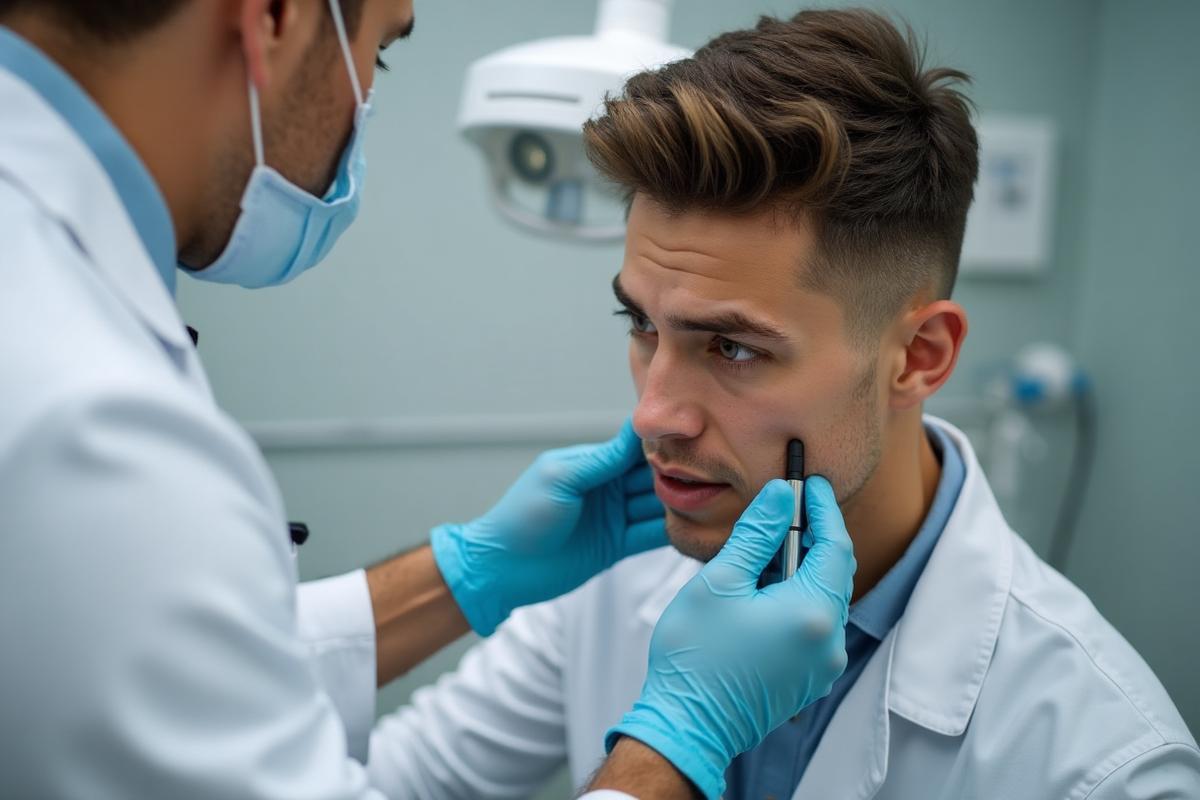
🎬 Video Coming Soon: Dr. Teresa Moreno explains effective seborrheic dermatitis treatment strategies
Our dermatologists offer a full range of treatments tailored to the location and severity of your condition.
Prescription-strength antifungal shampoos with ketoconazole, ciclopirox, or selenium sulfide.
Creams and solutions targeting Malassezia yeast on the face and body.
Specialized treatments for stubborn scalp seborrhea, including prescription solutions and corticosteroid preparations.
Topical corticosteroids and calcineurin inhibitors to reduce inflammation.

Seborrheic dermatitis can affect multiple areas of the body, each requiring tailored treatment approaches.
The scalp is the most common site, causing dandruff ranging from mild flaking to thick, adherent scales.
Commonly affects the eyebrows, sides of the nose, and behind the ears.
These conditions can occur together or be confused with each other.
Some patients have overlapping features of seborrheic dermatitis and psoriasis.
Since seborrheic dermatitis is a chronic condition, long-term management strategies are important.
Even when your skin is clear, continuing treatment at reduced frequency can prevent recurrence.
Stress, cold weather, hormonal changes, and certain health conditions can trigger flares.
Since Malassezia yeast plays a key role, antifungal treatments are often the cornerstone of therapy.
Seborrheic dermatitis can coexist with other skin conditions like eczema or psoriasis.
Seborrheic dermatitis is linked to an overgrowth of Malassezia yeast, combined with an inflammatory reaction. Factors like stress, hormones, cold weather, and certain medical conditions can trigger flares.
Dandruff is a mild form of seborrheic dermatitis affecting only the scalp. More severe cases can affect the face, ears, chest, and other oily areas.
While there is no permanent cure, it can be effectively controlled with proper treatment.
Seborrheic dermatitis is a chronic condition. Triggers like stress, weather changes, and discontinuing treatment can cause flares. Maintenance therapy helps prevent recurrence.
Don't let flaking and irritation control your life. Schedule a consultation today.
Call (786) 738-9515