
The ABCDE Guide to Moles: When to Get a Skin Check in South Florida
Use ABCDE to notice changes, not to diagnose yourself. A new, evolving or non-healing spot deserves clinical assessment.
Skin Cancer Screening & Mole Removal in Miami
Patient information by Paradise Medical Center Dermatology Clinic. Clinical director: Dr. Teresa Moreno, DNP, APRN, FNP-BC, DC. Dr. refers to her doctoral nursing degree.
What does ABCDE mean?
A is asymmetry, when one half looks unlike the other. B is an irregular border. C is uneven or multiple colors. D is diameter, often discussed around 6 mm, but melanoma can be smaller. E is evolution: any change in size, shape, color or symptoms. A spot unlike your other moles can also be important. These are clues for arranging evaluation, not a checklist that can prove a mole is harmless.
What should Miami patients do between visits?
Notice your usual skin pattern, including areas easily missed, and record changes with clear photographs if helpful. South Florida sun exposure makes protection relevant year-round: use shade, protective clothing and sunscreen according to guidance. A tan is not evidence of healthy skin. Do not assume that darker skin is immune to cancer or that a lesion must hurt before it matters.
When should you contact the clinic?
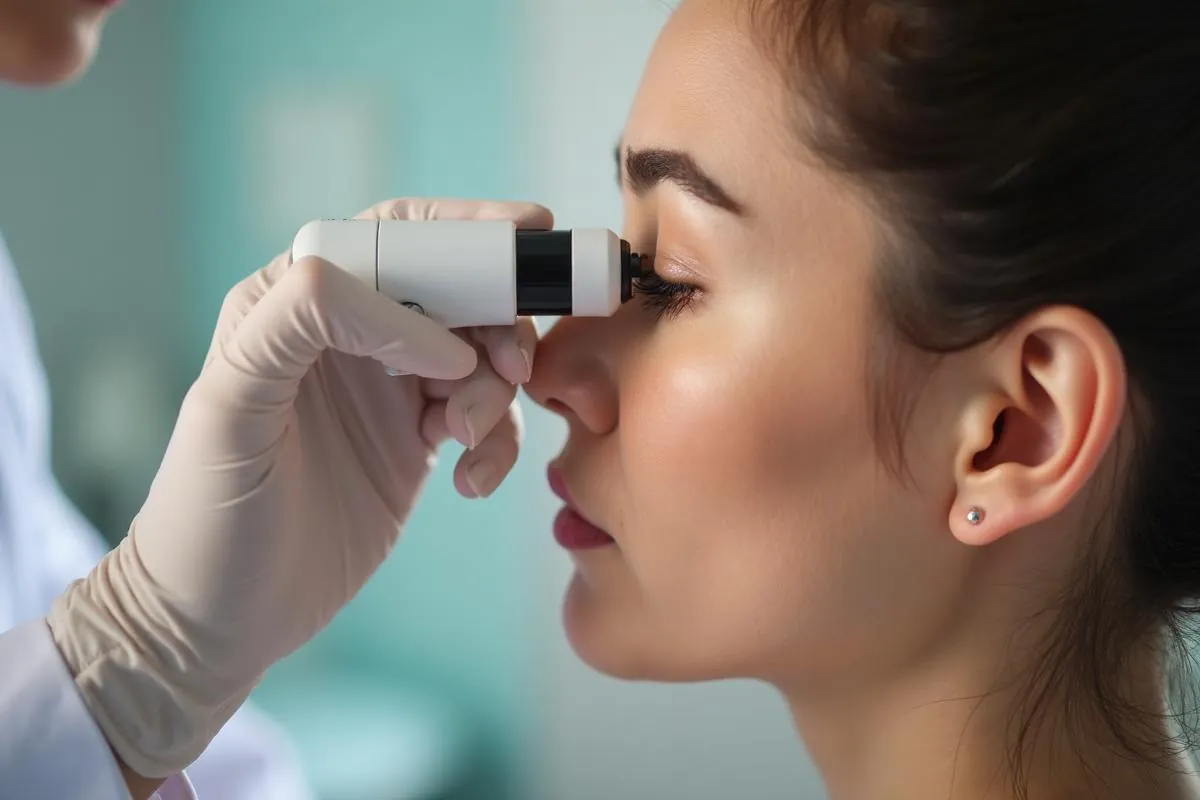
Request assessment for a changing mole, new unusual spot or sore that repeatedly bleeds or fails to heal. Bring the date you noticed it, photos and personal or family skin-cancer history. The Westchester team can discuss examination, dermoscopy and whether biopsy is indicated. Call (786) 738-9515; do not wait for every ABCDE sign or use home removal products on a suspicious lesion.
Need a consultation in Miami?
Consult the team led by Dr. Teresa Moreno at Paradise Medical Center Dermatology Clinic, 8364 SW 8th St, Westchester, Miami. The office confirms your time, treating professional and suitable treatment.
Requests are not confirmed appointments. Same-day visits are subject to availability.
Frequently asked questions
Can melanoma be smaller than 6 mm?
Yes. Small size does not rule it out; new or changing lesions need assessment.
Must a concerning mole hurt?
No. Concerning lesions may be painless.
Related patient guides
Services and further reading
Sources and clinical consultation
This is educational information, not a diagnosis or a replacement for personal clinical instructions. Procedures, treating professionals and products are confirmed at consultation.