
Basal Cell vs. Melanoma: Early Warning Signs
A non-healing sore and a changing pigmented spot can both matter. Appearance alone cannot reliably identify the cancer type.
Skin Cancer Screening & Mole Removal in Miami
Patient information by Paradise Medical Center Dermatology Clinic. Clinical director: Dr. Teresa Moreno, DNP, APRN, FNP-BC, DC. Dr. refers to her doctoral nursing degree.
How may basal cell carcinoma appear?
Basal cell cancer may look like a pearly bump, a pink patch, a scar-like area or a sore that heals and returns. It can also be pigmented. It commonly occurs on sun-exposed skin, but location alone does not establish the diagnosis. Repeated bleeding or a persistent lesion should not be dismissed as an ordinary pimple or scratch.
How may melanoma differ?
Melanoma may be a new or evolving spot with asymmetry, uneven borders or varied color. Some melanomas are small, lightly colored or do not resemble a classic dark mole. The ABCDE guide is useful for noticing change, not excluding disease. Both cancers can occur in people with different skin tones. A picture comparison cannot replace examination and, when indicated, biopsy.
What is the next step if you notice a warning sign?
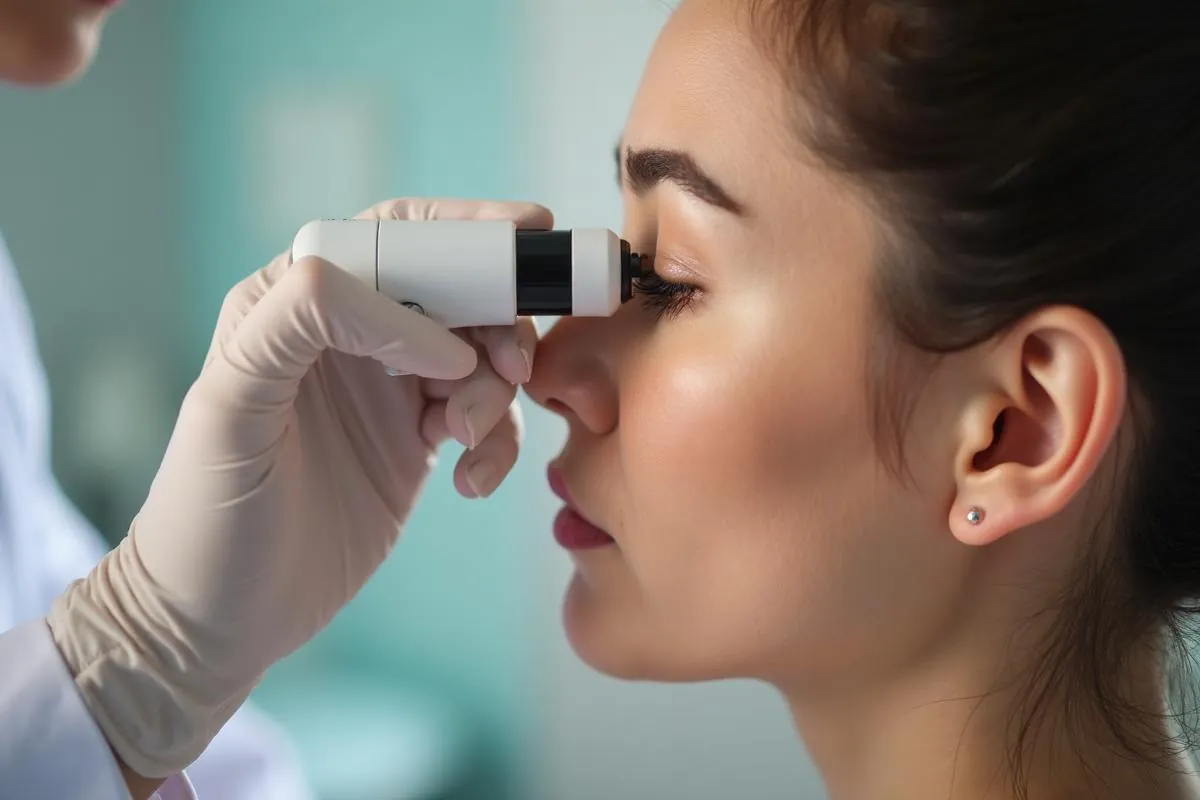
Note when it began, whether it changed or bled and any previous skin-cancer history. Contact the Westchester dermatology office at (786) 738-9515 for lesion evaluation rather than trying home treatment. The team assesses whether dermoscopy, biopsy or referral is needed. The treatment pathway depends on pathology and clinical findings; this article does not diagnose a lesion or promise a specific surgical treatment.
Need a consultation in Miami?
Consult the team led by Dr. Teresa Moreno at Paradise Medical Center Dermatology Clinic, 8364 SW 8th St, Westchester, Miami. The office confirms your time, treating professional and suitable treatment.
Requests are not confirmed appointments. Same-day visits are subject to availability.
Frequently asked questions
Can I identify the cancer type from a photo?
No. Clinical assessment and sometimes biopsy are needed.
Is a non-healing sore worth checking without a dark mole?
Yes. A persistent or repeatedly bleeding lesion deserves evaluation.
Related patient guides
Services and further reading
Sources and clinical consultation
This is educational information, not a diagnosis or a replacement for personal clinical instructions. Procedures, treating professionals and products are confirmed at consultation.